

Who Makes Medical Decisions If You Cannot Speak for Yourself?
Imagine your aging parent is suddenly hospitalized after a fall, stroke, or serious illness. The doctor needs to make an important medical decision, but your parent is unable to communicate.
Who gets to decide what happens next?
Many families assume a spouse or adult child automatically has the authority to make medical decisions. However, the answer depends on whether legal documents are in place and the laws in your state.
Understanding how medical decision-making works before an emergency can help prevent confusion, disagreements, and unnecessary stress.
What Happens If You Cannot Make Your Own Medical Decisions?
If someone becomes unable to understand, communicate, or make their own healthcare decisions, another person may need to step in.
This can happen because of:
A stroke or serious medical emergency
Advanced dementia or Alzheimer's disease
An accident or sudden injury
Unconsciousness or severe illness
Medical conditions affecting decision-making capacity
If a person has already appointed someone through a Medical Power of Attorney, that individual may have the legal authority to make healthcare decisions when the document's conditions are met.
Without this document, the process can become more complicated.
What Is a Medical Power of Attorney?
A Medical Power of Attorney, sometimes called a Healthcare Power of Attorney or Healthcare Proxy, is a legal document that allows you to choose someone you trust to make medical decisions if you cannot make them yourself.
This person may be called your healthcare agent or healthcare representative.
Depending on state law and the document, your healthcare agent may help make decisions about:
Medical treatments and procedures
Hospital and healthcare providers
Medications and ongoing care
Long-term care and treatment options
Life-sustaining treatments and end-of-life care
Your healthcare agent should follow your known wishes and preferences. When those wishes are unknown, applicable law generally guides how decisions should be made in your best interests.
Important: A Medical Power of Attorney is different from a Financial Power of Attorney, which addresses financial matters.
Who Makes Medical Decisions Without a Power of Attorney?
If there is no Medical Power of Attorney, state laws often determine who can make healthcare decisions for someone who lacks decision-making capacity.
Depending on the state, potential decision-makers may include:
A spouse
Adult children
Parents
Adult siblings
Other relatives or legally recognized individuals
However, this order is not the same in every state.
Some states have specific healthcare surrogate laws, while others may require additional legal steps or court-appointed guardianship in certain situations.
Disagreements between family members can also make medical decisions more difficult.
Medical Power of Attorney vs. Advance Directive: What's the Difference?
These documents often work together, but they serve different purposes.
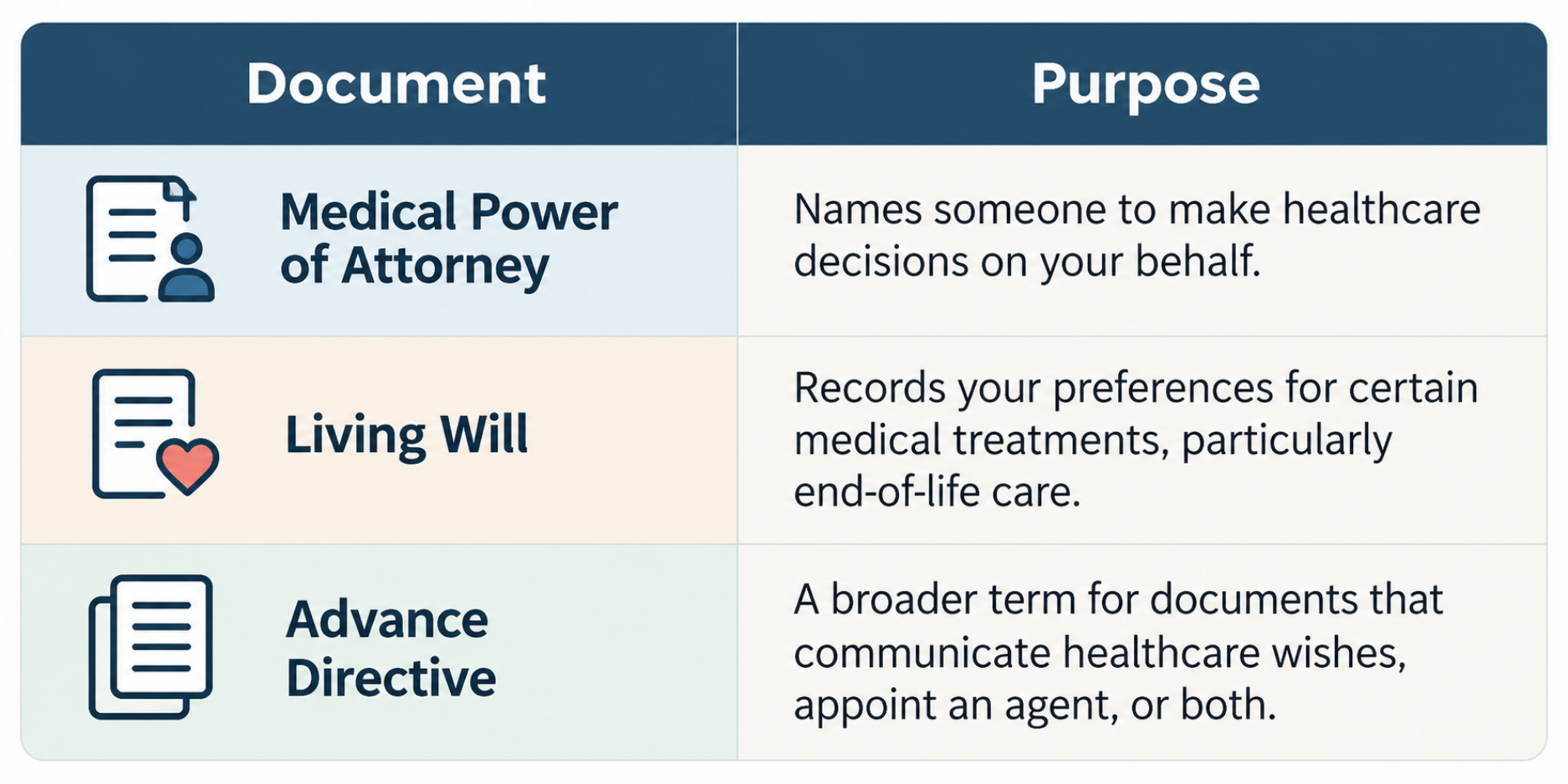
Having these documents prepared can give your loved ones clearer guidance when difficult decisions arise.
How to Prepare Before a Medical Emergency
You don't have to wait until a health crisis to start the conversation.
Here are four practical steps families can take:
1. Choose a trusted healthcare decision-maker. Select someone who understands your wishes, communicates clearly, and can handle difficult decisions.
2. Put the proper documents in place. Complete a state-appropriate Medical Power of Attorney and consider other advance healthcare directives.
3. Talk about your healthcare preferences. Discuss treatment options, long-term care wishes, and what matters most to you.
4. Make documents accessible. Give copies to your healthcare agent and appropriate medical providers, and let family members know where to find them.
Give Your Family Clarity Before They Need It
Medical emergencies can happen without warning. But making decisions about who will speak for you doesn't have to wait until something goes wrong.
Having a Medical Power of Attorney and clear healthcare instructions can help your family understand your wishes and make informed decisions when it matters most.
At the Aging Parent Resource Center, we help families navigate important conversations and prepare for the challenges of caring for aging loved ones.
From Powers of Attorney and estate planning to long-term care and Medicaid planning, our resources are designed to make the process easier to understand.
Don't wait for an emergency to find out who's authorized to make decisions.
Visit AgingParentResourceCenter.com to explore our guides, checklists, and resources for aging parents and their families.
Important Note
This article is for educational purposes only and does not provide legal advice or personalized legal recommendations. Estate planning needs and requirements can vary based on individual circumstances and applicable law.


