

Will vs. Trust: What's the Difference and Which One Do You Need?
Your mom tells you she already has a will, so there's nothing to worry about.
But does having a will mean everything is taken care of?
When helping aging parents organize their legal documents, you may come across two common estate planning tools: wills and trusts.
Both can help protect your parent's wishes, but they work differently. Understanding those differences can help your family decide what documents may be needed before an emergency happens.
What Is a Will?
A will is a legal document that explains what someone wants to happen to their property and belongings after they pass away.
For example, your dad might use a will to specify who should receive his home, savings, or personal belongings.
A will can help your parent:
Decide who inherits their property.
Name someone to handle their estate.
Leave clear instructions about how assets should be distributed.
One important thing to know: A will generally goes through probate, the court process used to settle someone's estate.
Having a will doesn't automatically mean your family can avoid court involvement.
What Is a Trust?
A trust is a legal arrangement that allows someone, called a trustee, to manage assets for the benefit of another person.
Unlike a will, certain trusts can help manage assets while your parent is still alive.
For example, your mom could create a revocable living trust and transfer her home into it. If she later becomes unable to manage her finances, a successor trustee may be able to step in according to the trust's instructions.
A properly funded living trust may also help certain assets pass to beneficiaries without going through probate.
However, not all trusts work the same way.
Some can be changed, while others are designed to be permanent. The right choice depends on your parent's goals, finances, and state laws.
Will vs. Trust: What's the Difference?
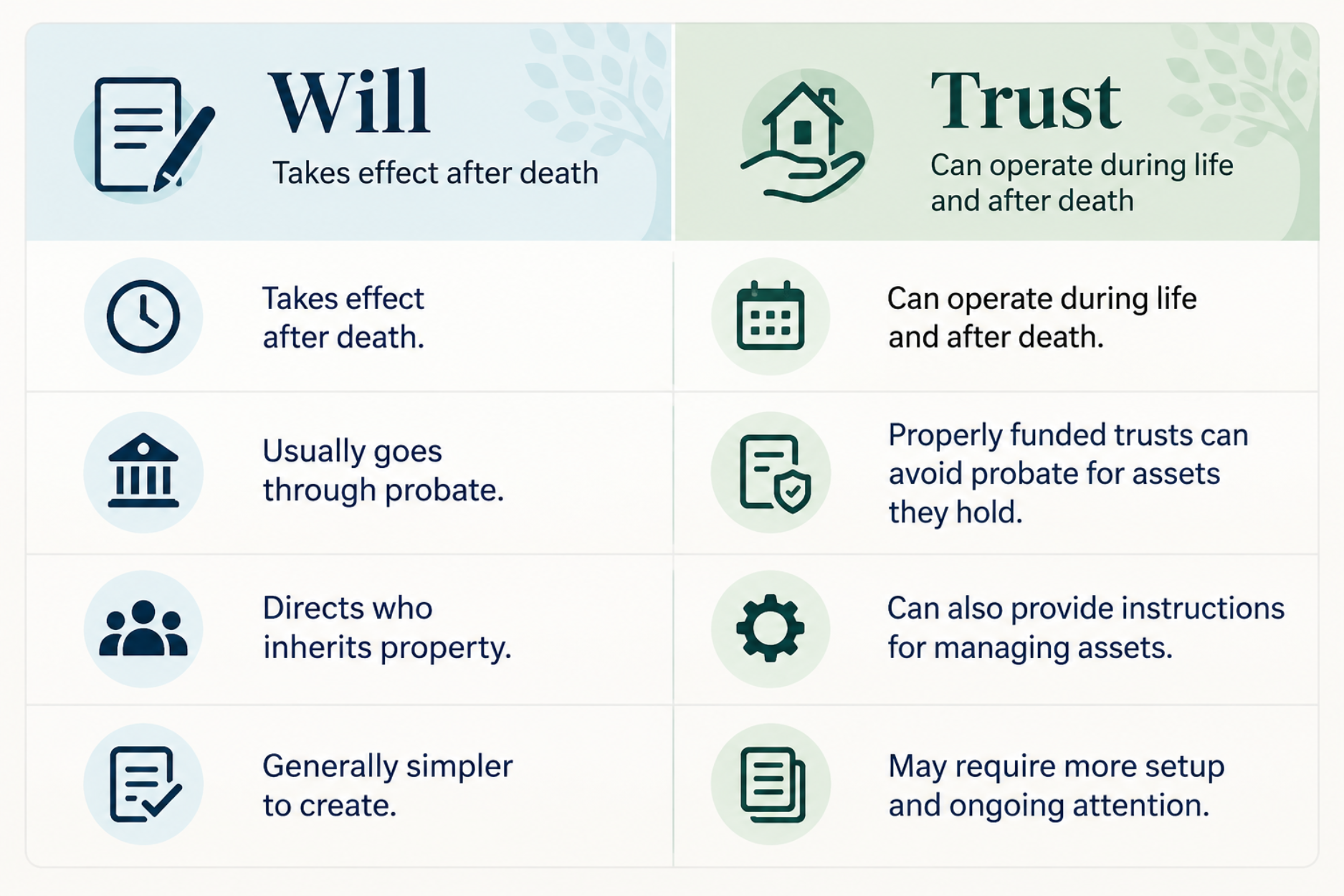
Remember: A trust only controls assets that are properly placed in it or otherwise made payable to it. Creating the document alone doesn't automatically transfer everything your parent owns.
Does Your Parent Need a Will, a Trust, or Both?
The answer depends on your parent's situation.
A will may be enough for someone with a relatively simple estate who wants to make sure their belongings go to the right people.
A trust may be worth considering if your parent:
Owns a home or other significant assets.
Wants to make asset management easier if they become incapacitated.
Hopes to help their family avoid probate for certain assets.
Wants more control over when and how beneficiaries receive an inheritance.
Some families benefit from having both a will and a trust because they serve different purposes.
It's also important to understand that a regular revocable living trust does not automatically protect assets from nursing home costs or Medicaid eligibility rules. Medicaid asset protection involves different considerations, and rules vary by state.
Don't Forget About Power of Attorney
Wills and trusts are important, but they aren't the only estate planning documents aging parents should consider.
A financial Power of Attorney allows your parent to authorize someone to handle certain financial matters if they need assistance.
A healthcare Power of Attorney allows a chosen person to make medical decisions when your parent cannot make those decisions themselves.
These documents serve different purposes from a will or trust.
Having the right documents in place can make it easier for your family to respect your parent's wishes when circumstances change.
What Should Your Family Do Next?
You don't need to figure out every estate planning detail today.
Start with a few simple steps:
Ask what documents already exist. Does your parent have a will, trust, or Power of Attorney?
Check when they were last updated. Major life changes may mean it's time for a review.
Find out where they're kept. Make sure the appropriate people know how to access important documents.
Talk about your parent's wishes. Understanding what matters to them is just as important as having paperwork.
Ask an estate planning attorney for guidance. They can help determine which documents fit your parent's needs and state laws.
A Little Preparation Can Make a Big Difference
Estate planning isn't just about what happens after someone passes away. It's also about helping your aging parents maintain control over their choices and making important decisions easier for the people they love.
Whether your family needs a will, a trust, or both, the best place to start is by understanding your options.
At the Aging Parent Resource Center, we help families make sense of important documents, future care decisions, and the conversations that come with helping aging parents.
Visit agingparentresourcecenter.com for practical resources and guidance to help your family prepare with more confidence.
Disclaimer: This article is for educational purposes only and is not legal or financial advice. Estate planning and Medicaid rules vary by state. Consult a qualified estate planning or elder law attorney for advice specific to your family's circumstances.


