

5 Estate Planning Mistakes That Can Make Things Harder for Your Family
Imagine your dad is suddenly hospitalized, and you need to help manage his bills or make an important healthcare decision.
You know he has a will somewhere, but you're not sure where it is. You also don't know whether anyone has Power of Attorney.
Situations like this are why estate planning for aging parents is about more than deciding who inherits what.
Having the right documents and conversations in place can help your family make decisions with more confidence and less confusion.
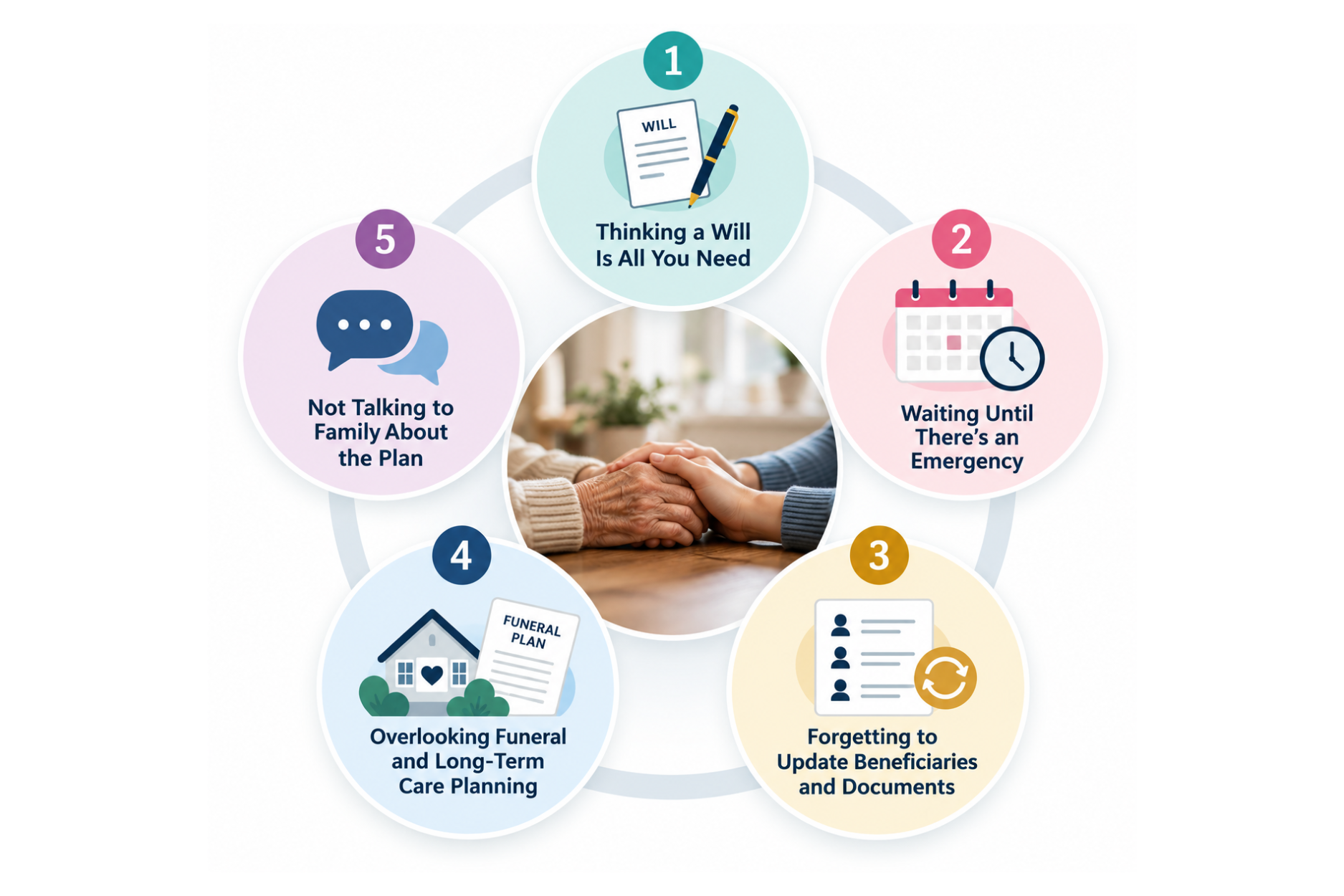
Here are five common estate planning mistakes and what you can do to avoid them.
1. Thinking a Will Is All You Need
A will explains how someone wants their property distributed after death. But it doesn't give family members the authority to manage finances or make medical decisions while that person is alive.
Other important estate planning documents may include:
Financial Power of Attorney: Allows a trusted person to handle certain financial matters.
Healthcare Power of Attorney: Names someone to make healthcare decisions when your parent cannot.
Living Will or Advance Directive: Communicates preferences about medical care.
Trusts: May help manage assets and determine how they are distributed.
What to do: Ask your parent which documents they already have and whether anything is missing. An estate planning attorney can help determine what is appropriate.
2. Waiting Until There's an Emergency
It's easy to put off estate planning when your parent is healthy and independent.
But if they experience a stroke, develop significant memory problems, or become unable to make decisions, creating certain legal documents may become more complicated.
For example, your family may need court involvement if your parent can no longer legally authorize someone to act on their behalf.
What to do: Start the conversation while your parent can still clearly communicate their wishes and make their own choices.
You don't have to complete everything in one sitting. Even asking where important documents are kept is a useful first step.
3. Forgetting to Update Beneficiaries and Documents
Life changes, but estate planning documents don't automatically change with it.
A marriage, divorce, death in the family, or change in financial circumstances may affect your parent's wishes.
One detail families sometimes overlook is that beneficiary designations on life insurance policies and certain financial accounts may determine who receives those assets, even if a will says something different.
What to do: Encourage your parent to review their will, trusts, life insurance beneficiaries, and Power of Attorney documents after major life changes.
Make sure the people named still reflect their wishes.
4. Overlooking Funeral and Long-Term Care Planning
Estate planning isn't only about what happens after someone passes away. It's also about preparing for future care needs and expenses.
For example, nursing home costs can affect a family's finances, and funeral expenses can create additional decisions during an already difficult time.
Depending on the situation, families may want to explore:
Long-term care planning and potential care costs
Medicaid spend-down rules and eligibility requirements
Funeral pre-planning and ways to fund final expenses
An irrevocable funeral trust, which may help set aside money for funeral expenses and receive favorable treatment under applicable Medicaid rules
These options aren't right for everyone, and rules vary by state.
What to do: Before transferring assets or purchasing financial products, speak with qualified professionals who understand estate planning and Medicaid rules in your state.
5. Not Talking to Family About the Plan
Even well-prepared estate planning documents can leave families confused if no one knows they exist.
Imagine three siblings trying to help Mom after a hospital stay. One believes she wants to remain at home, another thinks assisted living is best, and no one knows whom she authorized to make decisions.
A conversation ahead of time can help everyone better understand her preferences.
What to do: Encourage your parent to share:
Who they've chosen to make financial and healthcare decisions
Where important documents are stored
Their preferences for future care
Who to contact if something unexpected happens
Your parent doesn't have to share every financial detail. The goal is to make sure the right people know what they need to know.
A Little Preparation Now Can Make Things Easier Later
Estate planning for aging parents doesn't have to happen all at once.
Start with one conversation, review one document, or ask one question you've been meaning to bring up.
The goal isn't to take control away from your parent. It's to help protect their choices and make sure your family understands how to support them.
At the Aging Parent Resource Center, we help families understand important decisions involving wills and trusts, Power of Attorney, long-term care, and funeral planning.
Explore our practical resources and guidance at agingparentresourcecenter.com.
Disclaimer: This article is for educational purposes only and is not legal, financial, or tax advice. Estate planning and Medicaid rules vary by state. Consult qualified professionals for guidance specific to your family's situation.


